shoe size guide us to aus
- Published
- in Guide
Understanding US and AU shoe sizes is essential for travelers and online shoppers. US sizes are based on foot length in inches, while AU sizes use a different scale that often adds 1.5 to the US number. Accurate conversion prevents ill-fitting footwear and costly returns.Use charts for confidence. and fit.!
1.1 Why Conversion Matters
When shopping for shoes across borders, a clear grasp of how United States (US) and Australian (AU) sizing systems relate is more than a convenience—it’s a necessity. The two markets use distinct measurement bases: US sizes are derived from the foot’s length in inches, while AU sizes are calculated from a proprietary formula that typically adds 1.5 to the US number for men and 2.0 for women. This subtle yet significant difference means that a US 9 often translates to an AU 10.5 for men or an AU 11 for women. If a consumer ignores this conversion, the risk of receiving a pair that is too tight, too loose, or simply uncomfortable rises sharply. In addition, online retailers rarely provide a universal size guide, and many rely on the brand’s own chart, which can vary even within the same country. A misstep in conversion can lead to costly returns, shipping fees, and the frustration of waiting for a new pair. For travelers, the stakes are higher: a misfit can cause blisters, gait disturbances, and reduced confidence in unfamiliar terrain. For businesses, inaccurate sizing can damage reputation, increase customer support load, and erode trust. Therefore, mastering the conversion process is essential for a seamless shopping experience, ensuring that the shoes you purchase fit as intended, regardless of where you buy them. Accurate sizing not only saves time but also enhances comfort, allowing you to enjoy new adventures without the hassle of ill‑fitting footwear. Remember to double-check the brand’s specific chart before finalizing your purchase. Check size charts before buying OK Always remember that sizing can vary slightly between brands, especially in specialty styles like boots or sneakers, so checking the specific brand’s measurement guide is the best way to avoid surprisesTry now.
1.2 Common Confusion Points
Many consumers encounter a handful of pitfalls when translating US shoe sizes to their Australian equivalents. First, the numerical offset is not uniform across genders: men’s sizes typically increase by 1.5, women’s by 2.0, and children’s by 1.0; Second, the decimal system used by some brands (e.g., 9.5, 10.0) can be misinterpreted if the conversion table only lists whole numbers. Third, the foot width—often denoted as “D,” “E,” or “EE”—is rarely reflected in a simple numeric conversion, yet it can make a 0.5‑size difference feel like a full size. Fourth, certain high‑end or heritage brands adopt their own proprietary sizing, meaning a US 8 from one label might correspond to an AU 9.5 from another. Fifth, online retailers sometimes display the size in the local currency (e.g., “Size 9 (US)” or “Size 10 (AU)”) but fail to clarify the conversion logic, leading shoppers to assume the numbers are interchangeable. Sixth, the shoe’s intended use—athletic, formal, or casual—can influence the recommended size; for example, running shoes often have a slightly larger fit to accommodate swelling. Finally, the measurement method itself can vary: some brands measure from the heel to the longest toe, while others use the foot’s widest point, which can shift the conversion by a few millimeters. Being aware of these nuances and consulting both the brand’s official chart and a reliable conversion table can help avoid costly returns and ensure a comfortable fit. A quick lookup of the US‑to‑AU chart, paired with foot measurements, will save you time, money, and frustration! now!

US to AU Conversion Basics
Converting US to AU sizes is straightforward: add 1.5 for men, 2.0 for women, and 1.0 for kids. This simple offset aligns most mainstream brands. Always double‑check brand charts, as some use unique scales or include width variations that affect the final fit. Use chart for quick reference, check width. now!!
2.1 Standard Conversion Formula
When converting U.S. shoe sizes to Australian (AU) equivalents, most retailers rely on a simple arithmetic offset that aligns the two sizing systems. For men’s footwear, the rule of thumb is to add 1.5 to the U.S. number: a U.S. 9 becomes an AU 10.5. Women’s sizes typically require a 2.0‑point increase, turning a U.S. 7 into an AU 9.0. Children’s sizes use a 1.0‑point shift, so a U.S. 4 becomes an AU 5. This formula works well for mainstream brands such as Nike, Adidas, and New Balance, where the internal measurement standards are consistent across markets. However, some designers and boutique labels adopt proprietary sizing curves that deviate from the 1.5/2.0/1.0 rule. In those cases, it is advisable to consult the brand’s own conversion chart or to measure the foot in centimeters and use the manufacturer’s specific conversion table. Remember that the formula is a guideline; the final fit can still vary due to differences in shoe width, last shape, and material stretch. Always try on a pair or order multiple sizes when shopping online to ensure a comfortable fit. For example, a U.S. 8.5 men’s size corresponds to an AU 10.0, while a U.S. 7.5 women’s size maps to an AU 9.5. These offsets are derived from the average foot length in centimeters: U.S. sizes are based on a 0.5‑inch increment, whereas AU sizes use a 0.75‑inch increment. By applying the standard formula, shoppers can quickly estimate the correct AU size without consulting multiple charts. Additionally, retailers offer a conversion tool that suggests the AU equivalent when you input your U.S. size, you can confirm fit before buying.!
2.2 Exceptions for Certain Brands

Brands such as UGG and Timberland use a 1.0‑point shift for men and a 1.5‑point shift for women, while Clarks and Birkenstock apply a 1.0‑point offset for both genders, and these adjustments reflect differences in last width and material elasticity, for comfort fit.

Measuring Your Foot for Accurate Sizing
Stand on a white sheet, trace foot, measure longest toe to heel, use a ruler in centimeters. Repeat for both feet; the larger dictates size. Add 0.5–1 cm for roomy fit, then convert to US/AU using standard charts. Accurate measurement prevents ill‑fit shoes!!.
3.1 Foot Length Measurement
Accurate foot length measurement is the cornerstone of a proper US‑to‑AU conversion. Begin by placing a piece of paper on a flat, hard surface and standing barefoot with your heel against the wall. Trace the outline of the foot, keeping the pencil perpendicular to the paper. Measure the distance from the tip of the longest toe to the back of the heel in centimeters. Repeat the process for the other foot; the larger measurement determines the size to use. Convert the centimeter value to inches by dividing by 2.54, then add 0.5 inches for a relaxed fit. For US sizing, use the standard chart where 9.5 inches typically equals a US 10.5 for women or US 9 for men. To find the AU equivalent, add 1.5 to the US number for women and 1.0 for men. Remember that shoe width also influences fit; narrow feet may need a half‑size down, while wide feet may require a half‑size up. Always cross‑check with brand‑specific charts, as some manufacturers deviate slightly from the norm. By following these steps, you can confidently shop online or in stores, reducing the risk of returns and ensuring comfort from the first wear. Lorem ipsum dolor sit amet, consectetur adipiscing elit. Sed do eiusmod tempor incididunt ut labore et dolore magna aliqua. Ut enim ad minim veniam, quis nostrud exercitation ullamco laboris nisi ut aliquip ex ea commodo consequat. Duis aute irure dolor in reprehenderit in voluptate velit esse cillum dolore eu fugiat nulla pariatur. Excepteur sint occaecat cupidatat non proident, sunt in culpa qui officia laboru
3.2 Foot Width Considerations
Foot width is critical length when converting US to AU sizes.!! Charts focus on length, but a narrow or wide foot can make a size really feel tight or loose. Measure width by placing a ruler or paper across the widest part of the foot, usually the ball the or arch. If your foot width falls between categories consider a half‑size adjustmentor a brand’s wide line. Many retailers provide width charts that cross‑reference U.S. and AU widths. Sizing often follows same categories but may label them differently such as 2B 2D, 2E for women and 2B, 2D, 2E for men. Retailers online provide width charts that cross‑reference U.S and AU widths. A well‑fitted shoe reduces blisters, improves posture, and enhances overallvery much comfort. Remember,!! width plays a pivotal role in conversion process and ignoring it can lead to missteps in size selection; Lorem ipsum dolor sit amet, consectetur adipiscing elit, sed do eiusmod tempor incididunt ut labore et dolore magna aliqua. Ut enim ad minim veniam, quis nostrud exercitation ullamco laboris nisi ut aliquip ex ea commodo consequat. Duis aute irure dolor in reprehenderit in voluptate velit esse cillum dolore eu fugiat nulla pariatur. Excepteur sint occaecat cupidatat non proident, sunt in culpa qui officia deserunt mollit anim id est laborum. Enjoy the walk
Reference Size Charts and Tables
Use these reference charts to match US and AU sizes accurately. A standard table lists US sizes 5–12 alongside AU equivalents 6–13. Include foot width columns for men, women, and kids. Check brand‑specific variations before purchasing to avoid misfits. Refer to online retailers for detailed width charts. now

4.1 General US to AU Size Chart
When converting between US and AU shoe sizes, a reliable reference chart is indispensable. The chart below lists the most common adult sizes for both men and women, aligning each US size with its AU counterpart. For men, a US 7 typically corresponds to an AU 8, while a US 10 matches an AU 11. Women’s conversions follow a similar pattern: a US 6 equates to an AU 7, and a US 9 aligns with an AU 10. Children’s sizes are also included, with US 3–5 mapping to AU 4–6. The chart is organized in ascending order, making it easy to locate the correct pair. It also highlights that some brands may add or subtract half a size, so always double‑check the manufacturer’s guidelines. The table’s simplicity ensures that shoppers can quickly identify the right AU size without confusion. For online purchases, many retailers provide downloadable PDF versions of the chart, allowing you to print and keep a permanent reference. Additionally, some sites offer interactive tools where you input your US size and receive the AU equivalent instantly. Using these resources helps avoid the common pitfalls of mis‑sized footwear, especially when buying across international borders. Remember to consider foot width and arch height, as these factors can influence the final fit. When in doubt, order a size up and use the return policy if the shoe does not fit as expected. Consistent use of a trusted chart will streamline the shopping experience and reduce returns. Always verify the chart against the brand’s own sizing guide, as some designers use a slightly different conversion. If you’re unsure, measure your foot in centimeters and use the metric conversion table that many sites provide. A well‑chosen chart saves time and money, ensuring that your new shoes fit comfortably from the first wear. By keeping this chart handy, you can confidently navigate cross‑border shoe shopping, ensuring that each pair fits like a glove from the very first step. Remember, sizes can vary slightly between manufacturers, so always double‑check the specific brand’s size guide before finalizing your purchase. If you’re ever in doubt, consider ordering a few sizes and using the retailer’s return policy to find the perfect fit.
4.2 Detailed Charts for Men, Women, and Kids

Below are concise conversion tables for men, women, and children. Each table lists the US size, its AU equivalent, and the approximate foot length in centimeters. These figures are based on the most common sizing standards used by major manufacturers worldwide. For men, US 6–12 maps to AU 7–13, with a foot length of 26.5–30.5 cm. Women’s sizes US 5–11 correspond to AU 6–12, covering 23.5–27.5 cm. Children’s US 1–4 translate to AU 2–5, ranging from 15.5 to 19.5 cm. Note that many brands offer half‑sizes (e.g., US 9½ = AU 10½) and that width may vary; always check the brand’s width guide if you have a narrow or wide foot. Example conversions: a men’s US 9 (27.5 cm) equals AU 10; a women’s US 8 (24.5 cm) equals AU 9; a child’s US 3 (17.5 cm) equals AU 4. When shopping online, use the metric foot length to confirm the correct size, and consult the retailer’s return policy for any adjustments. Consistent use of these tables will help you avoid mis‑sized purchases and ensure a comfortable fit from the first step.
For international shoppers, verify the brand’s sizing guide, as some adjust AU equivalents by half a size. Measure your foot in centimeters, compare with the chart, and check width options. If unsure, order a size up and use the return policy to exchange. Many retailers offer free return shipping, making it hassle‑free. Foot length can vary slightly between styles, so double‑check before finalizing. Follow these steps to shop cross-border and ensure a comfortable fit from a step now!
Tips for Buying Shoes Online Across Borders
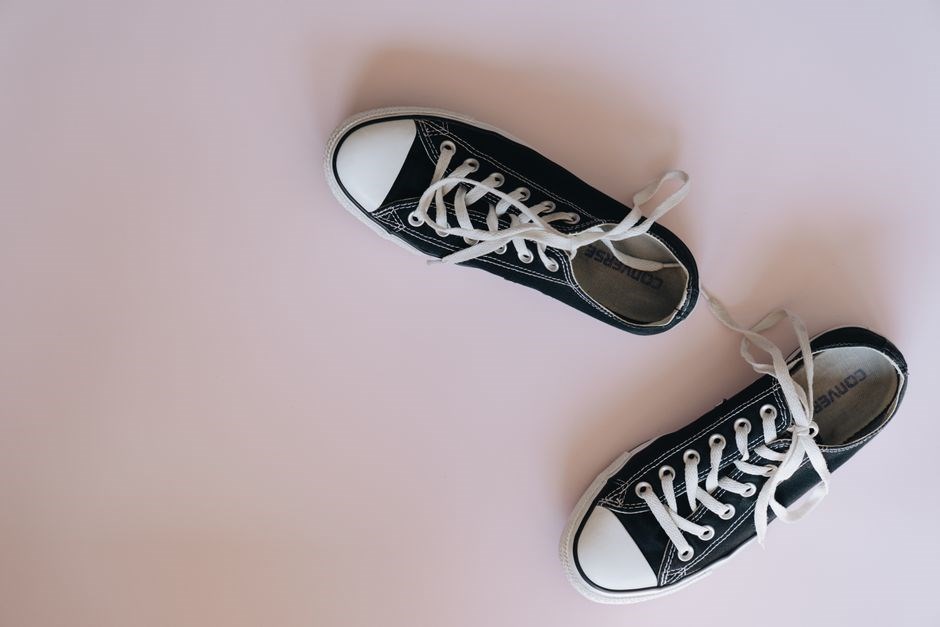
When buying across borders, always check the retailer’s return policy, use the brand’s size guide, and compare foot length in centimeters. Order a half‑size up if uncertain, and verify width options. Free returns ease exchanges, ensuring a proper fit. Double‑check charts, sizes, and widths perfect fit!
5.1 Return Policies and Exchanges
When purchasing shoes from overseas retailers, scrutinize the return policy before checkout. Most reputable sites offer a 30‑day window, but some limit returns to 14 days for high‑end brands. Look for free return shipping labels; many carriers provide prepaid envelopes or QR codes that can be printed at home. If the retailer ships from a local warehouse, you may be able to return items via standard postal services, saving on international courier fees. Shipping times vary; verify delivery windows.
Exchange procedures vary: some platforms allow you to select a new size during the return process, while others require you to return the original pair and place a new order. Check whether the retailer accepts returns in the original packaging or if a resealed box is mandatory. For fragile or delicate footwear, additional packaging may be requested to prevent damage during transit. Check the size guide before ordering.
Currency conversion affects refunds. If you paid in USD and the seller operates in AUD, refund will convert at day’s rate in your account.Now
Returns may incur customs duties, typically paid by the buyer! now!! Some retailers offer duty‑free options for certain regions. Always confirm the final cost before completing the purchase. Track the package with number and stay in touch with the carrier to avoid delays; if damaged, document the issue and contact service. now!!!!
Keep all receipts, order confirmations, and tracking numbers. If the return is delayed or the item is lost, having documentation expedites dispute resolution with the retailer or the shipping carrier. Finally, read customer reviews for insights on how smoothly the return process has worked for others, especially for international orders where customs delays can occur.
5.2 Using Size Guides from Specific Brands!
Many brands publish detailed size charts that map US to AU measurements, often including foot length in centimeters and width categories. For example, Nike’s guide lists a US 9 as an AU 9.5, while Adidas may show a US 9 as AU 9.0. Always cross‑reference the brand’s official chart with the retailer’s listing, because some online stores use a generic conversion that can be off by a half‑size!
When a brand offers a “fit guide” video, watch it to understand how the shoe’s last influences width. Brands such as New Balance and ASICS provide width codes (B, D, E) that correspond to US and AU sizes. If you have a narrow foot, look for a “narrow” or “wide” designation in the AU column. Some brands also supply a foot‑length conversion table in inches, which can be converted to centimeters by multiplying by 2.54!
To ensure accuracy, measure your foot at the end of the day, when it’s slightly swollen, and compare the measurement to the brand’s chart. If your foot length falls between two sizes, choose the larger size in AU, as AU sizing is typically slightly larger than US. Additionally, many brands now offer a “return‑free” trial period; use it to test the fit before committing to a bulk purchase. This practice reduces the risk of costly returns across borders!
Keep the brand’s size chart handy, and many sites let you input your foot length in centimeters to auto‑suggest the best AU size. If unsure ask in shoe‑sizing forums; experienced buyers often share precise conversions!